Factory · 6 min read
Inside PEILI RO pump manufacturing
Pre-assembly Zone 2, 6S on the floor, servo lines, and 12 kg leak on every serial — what OEM buyers actually see in Jiangmen.
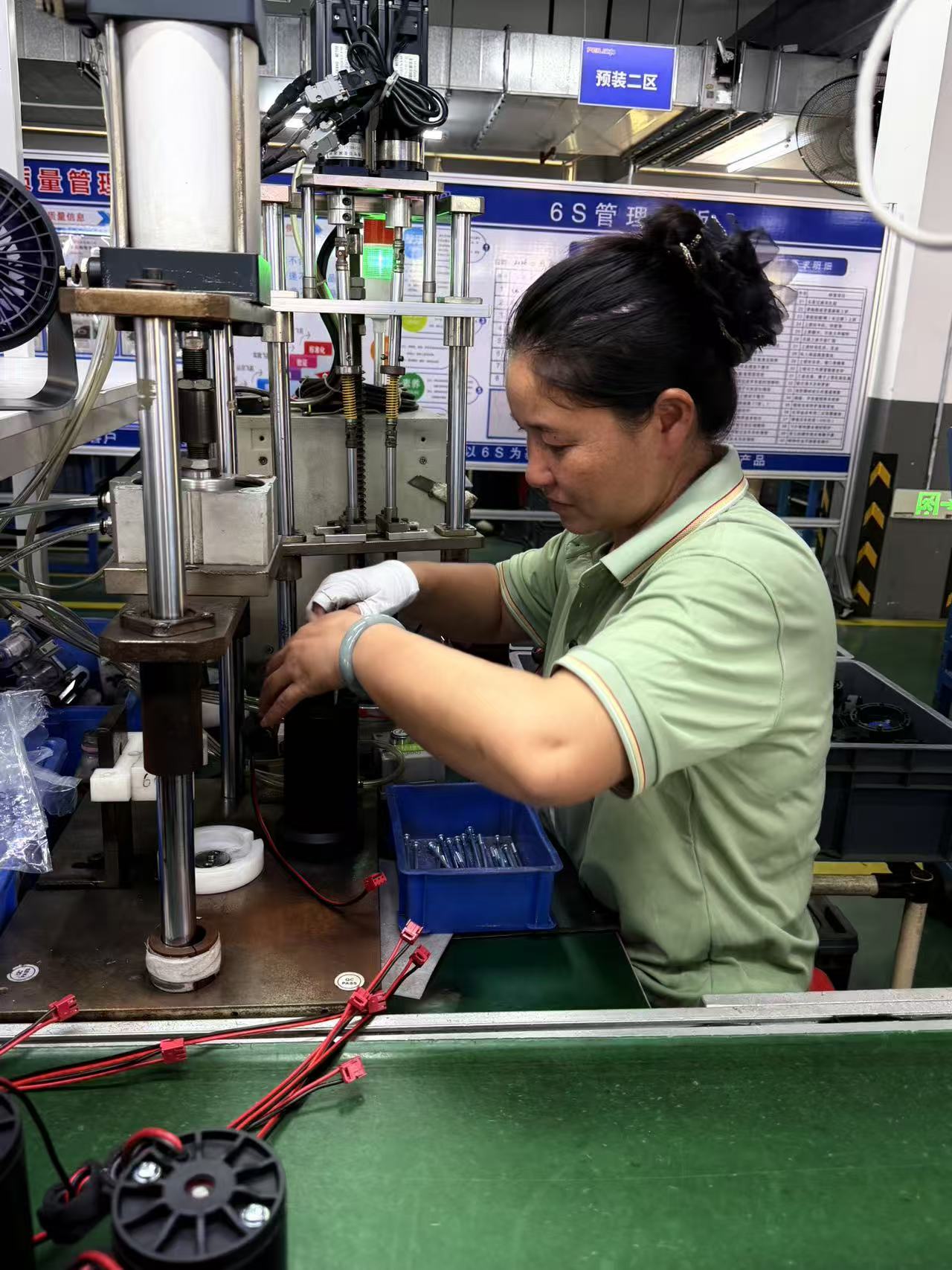
A datasheet tells you GPD and voltage. It does not tell you whether the head stack is set by a servo or by whoever showed up Tuesday. OEM buyers who audit factories look for three things: organized pre-assembly, repeatable press height, and a leak number that applies to every unit — not a sample from the carton.
Pre-assembly before the servo line
Every RO head passes through a pre-assembly zone before it hits the computer-controlled servo stations. Operators fit the motor stack, wire harness, and port block while the line is still open — so a mismatch is caught before the press closes. The blue parts bin at each station is deliberate: one SKU, one tray, no mixed fasteners wandering into the wrong batch.
That is slower than a pure conveyor blur, and that is the point. Kitchen RO returns cluster around leaks and loose stacks, not around a missing 50 GPD label on the carton.
6S is not a poster — it is how the line stays honest
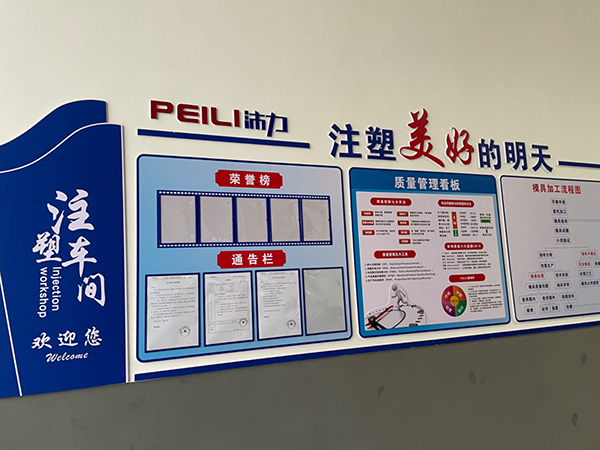
Walk any PEILI aisle and you will see 6S boards at the stations — sort, set in order, shine, standardize, sustain, safety. For an OEM auditor that translates to traceable batches, defined tool locations, and floors that stay clean enough to spot a gasket tear before it ships.
- — Sort — one pump family per station during a run; mixed SKUs wait for a changeover sheet
- — Set in order — bins, torque tools, and test fixtures live in marked positions
- — Shine — spills get wiped before the next stack, not at shift end
- — Standardize — press height and wire routing follow work instructions, not tribal memory
- — Sustain — line leaders sign off zone audits weekly
- — Safety — gloves, guarded presses, and locked-out maintenance on the hammer bench
After pre-assembly: servo press, then 100% leak
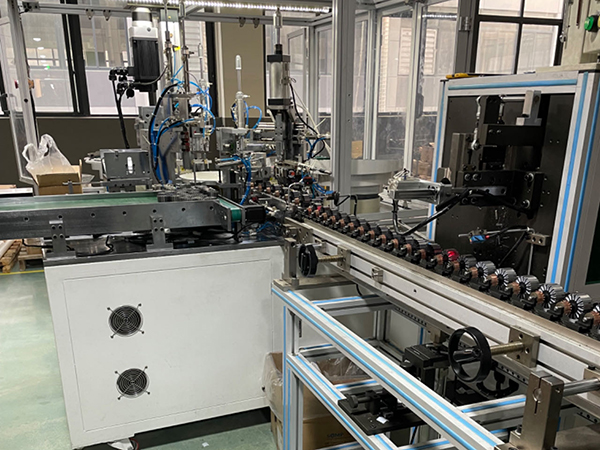
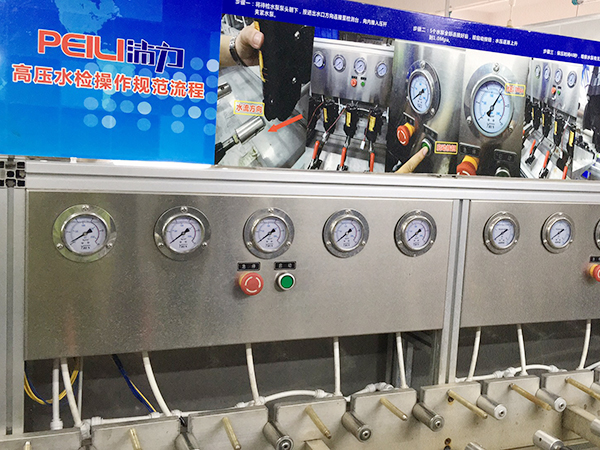
Three servo assembly lines take the pre-built stacks through final press and torque. Head height is stored in the controller so a night shift matches a day shift. Then every unit — not a sample — goes to 12 kg hydrostatic leak before it earns a serial.
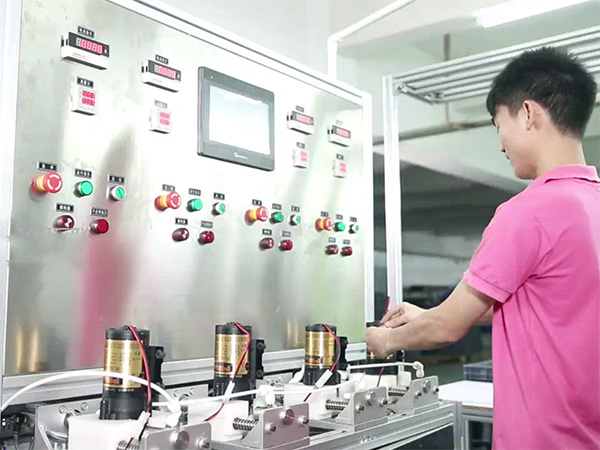
Protocol benches beside the line run 3.5 MPa burst and 12 kg × 100,000 water-hammer cycles on production batches. Flow and pressure curves can be stored per serial when your incoming QC sheet asks for traceability later.
R&D stays in Shunde; volume stays in Jiangmen
Acoustic tuning and endurance validation happen at Huazhi Science Park in Beijiao — including the silent chamber for 605 damping work. Mass production runs in Shenjiang Industrial Park, Xinhui, where the Bay Area supply chain meets 2M+ pumps per year. Same QC stack on both sides of the drive.

See it before you spec it
Send your target GPD, voltage, and incumbent model. We will confirm mechanical fit, share outline drawings, and — if you are auditing suppliers this quarter — point you to the factory tour video and live photos on our Factory page. Price is the last slide, not the first.
Next step
502 Compact Booster / Self-priming